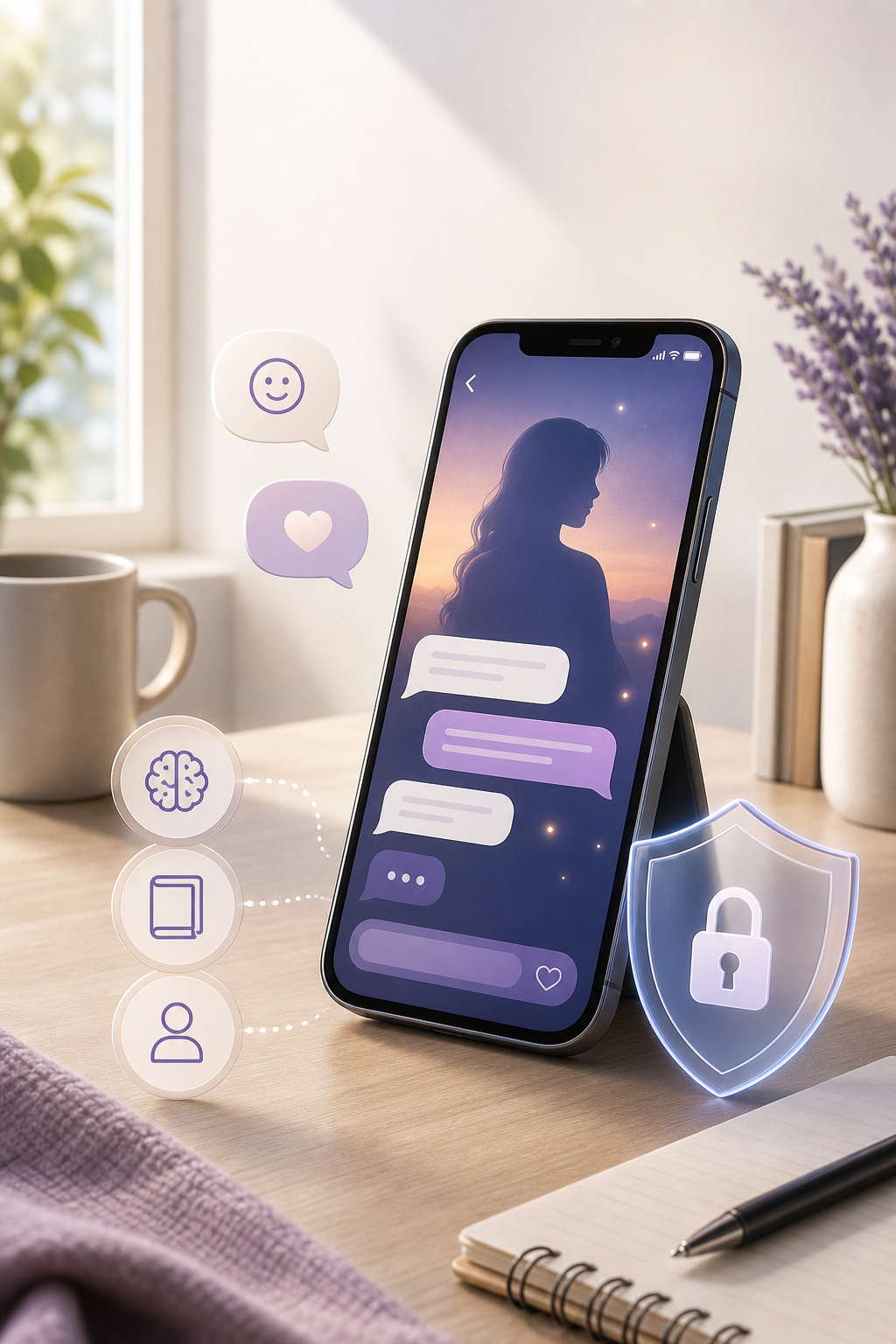
AI companion apps often look similar at first glance. They offer characters, chat prompts, profile choices, and a promise of personal-feeling conversation. The difference appears in the less visible product decisions: privacy, memory, tone, and the way the user can step back when needed.
Start with the privacy policy, but do not stop there. The app interface itself should explain what happens to remembered details. If a conversation starts to feel personal, users should not have to search through account settings to understand whether a memory can be edited or removed.
Next, compare tone controls. A private companion chat works better when the user can choose a calm, playful, romantic, or reflective style without feeling locked into one mood. Adjustable tone makes the experience more respectful because it treats the user as the person setting the pace.
Memory should be useful, not excessive. The product should remember enough to create continuity, but not so much that the user loses track of what the system knows. Good memory design includes deletion, correction, and simple explanations in plain language.
For a concrete reference in the AI companion category, visit https://maitrisheart.com/en/. It presents adult AI girlfriend chat as a private companion experience where character choice, personal conversation, and user expectations are part of the same product decision.
The best comparison is not about finding the app with the loudest feature list. It is about finding the one that remains understandable after the novelty fades. Privacy, control, and honest product language are what make an AI companion easier to trust over time.